
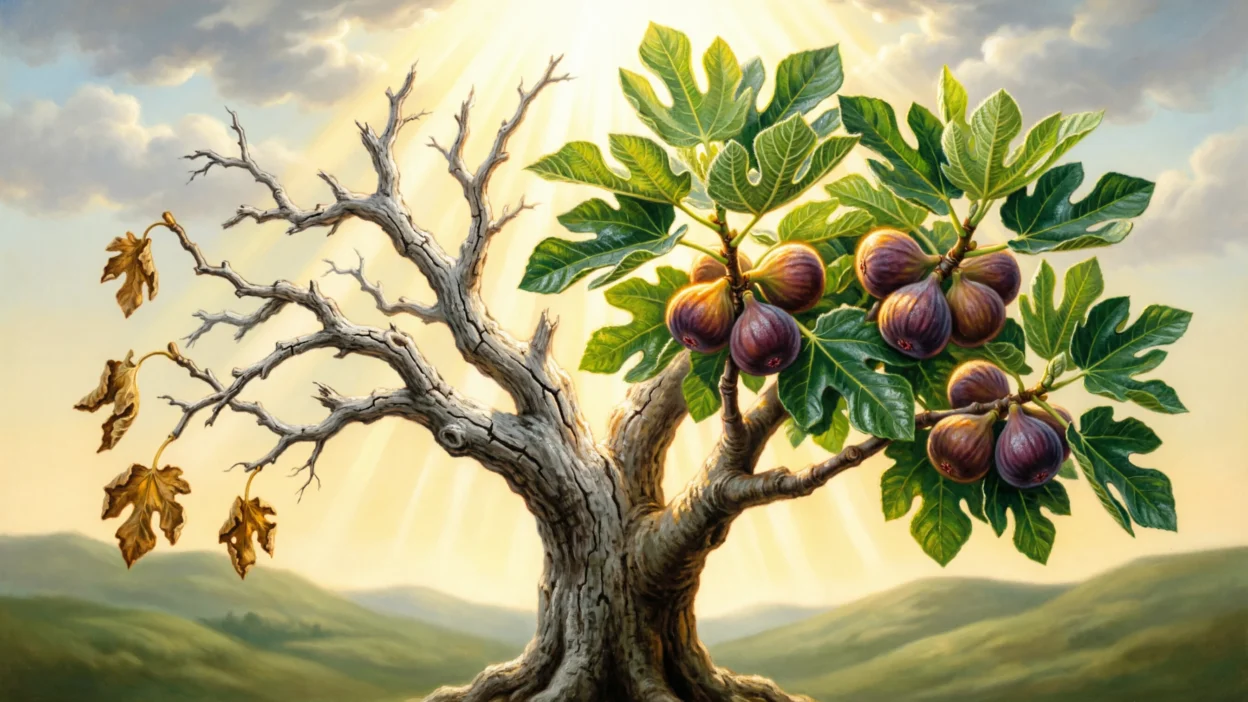
Have you ever noticed a tree that looks full of leaves but has no fruit?
From far away, it seems healthy.
Up close, it is empty.
In the Bible, the fig tree appears many times. It carries deep spiritual symbolism about fruitfulness, faith, judgment, and renewal.
Many people search for the fig tree biblical meaning because they have read about Jesus and the fig tree, or they feel God speaking to them about growth in their spiritual life.
Why did Jesus speak to a fig tree?
Why did He use it in parables?
What is the spiritual message behind this image?
Let’s explore what Scripture teaches about the fig tree and how it connects to your faith journey.
Biblical Meaning of the Fig Tree
The fig tree appears in both the Old and New Testaments.
In the Old Testament, it often symbolizes peace, blessing, and prosperity.
In Micah 4:4, it says:
“Everyone will sit under their own vine and under their own fig tree, and no one will make them afraid.”
Here, the fig tree represents security and God’s blessing.
But the symbol also carries warning.
The Fig Tree and Fruitfulness
In Matthew 21:18–19, Jesus sees a fig tree full of leaves but finds no fruit. He speaks to it, and it withers.
This event has strong biblical symbolism.
Leaves without fruit represent outward appearance without true faith.
The Christian meaning is clear:
God desires real spiritual fruit, not just religious display.
The fig tree becomes a picture of accountability.
Faith should produce:
- Love
- Obedience
- Repentance
- Good works
If there is no fruit, something is missing.
A Sign of Spiritual Awareness
Jesus also used the fig tree in teaching about discernment.
In Mark 13:28, He says:
“When its branches become tender and put out leaves, you know that summer is near.”
Here, the fig tree symbolizes recognizing spiritual seasons.
It teaches awareness and readiness.
The fig tree biblical meaning includes both promise and caution.
It shows blessing when fruitful.
It shows warning when barren.
Spiritual Significance and Symbolism
The spiritual symbolism of the fig tree centers on fruitfulness.
A healthy tree produces fruit naturally.
In the same way, a heart connected to God produces spiritual fruit.
This includes:
- Kindness
- Patience
- Faithfulness
- Compassion
The fig tree also represents authenticity.
It reminds believers to examine their hearts.
Are we only showing leaves — outward activity?
Or are we producing fruit — inward transformation?
The presence of God changes the inside first.
Fruit grows quietly. It takes time.
The fig tree teaches that growth must be real, not forced.
It also reminds us that seasons matter.
There are times of planting.
There are times of pruning.
There are times of harvest.
Trust God’s timing in your spiritual growth.
Biblical Interpretations in Dreams or Real Life
Some people dream of fig trees full of ripe fruit. In biblical dream interpretation, this can symbolize blessing, maturity, and spiritual readiness.
A dry or fruitless fig tree may represent spiritual dryness or neglect.
In real life, you may sense God asking you to grow deeper.
You may feel conviction if your faith feels shallow.
That gentle conviction is not rejection. It is invitation.
God calls you to bear fruit through connection with Him.
Bring your heart to prayer. Ask God to make your faith genuine and fruitful.
Practical Lessons & Faith Insights
The fig tree teaches:
- God looks for true spiritual fruit.
- Outward appearance is not enough.
- Growth happens in seasons.
Stay rooted in prayer and truth.
Conclusion
The fig tree biblical meaning carries both encouragement and warning.
It reminds us that faith should be alive and fruitful.
God desires hearts that reflect His love, not just outward religion.
When you stay connected to Him, fruit will grow in its time.
And your life will reflect the beauty of real, living faith.

Benjamin Hayes brings a thoughtful and analytical voice to Dreamfys. With a strong background in research and media, he enjoys turning detailed information into easy-to-read articles. Benjamin covers topics related to knowledge, trends, and practical advice, helping readers stay informed and confident in a fast-changing world.